


The word “guru” gets thrown around loosely today — every fitness influencer and life coach calls themselves one. But in the original Vedic tradition, the word carries extraordinary weight.
Gu means darkness. ‘Ru’ means ‘destroyer’. A guru destroys darkness — the darkness of ignorance, illusion, and separation from truth.
The guru-disciple relationship (Guru-Shishya Parampara) is the most sacred in Indian spiritual tradition – and understanding it can transform how you approach learning, mentorship, and your own spiritual growth.
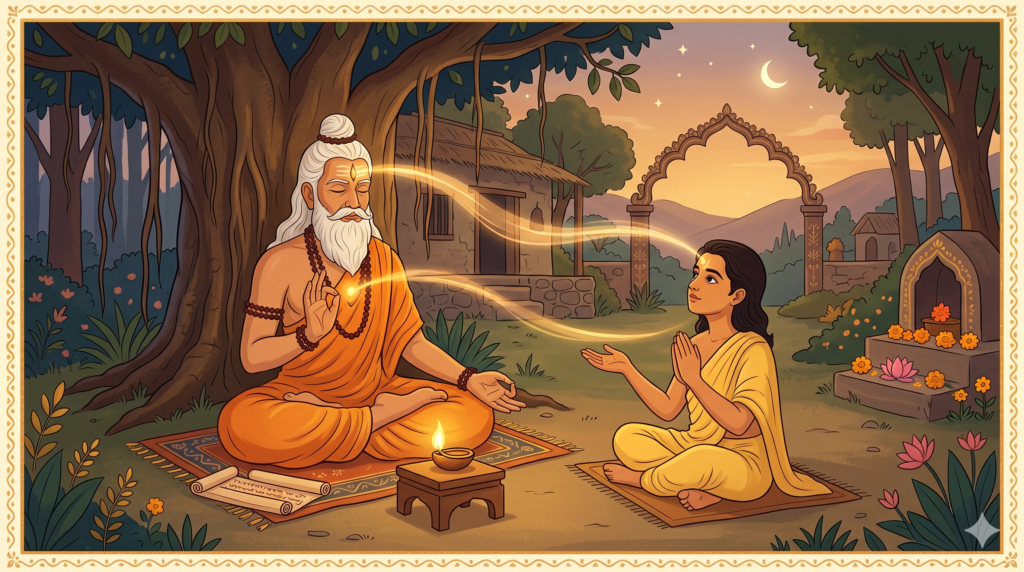
What Makes Someone a True Guru?
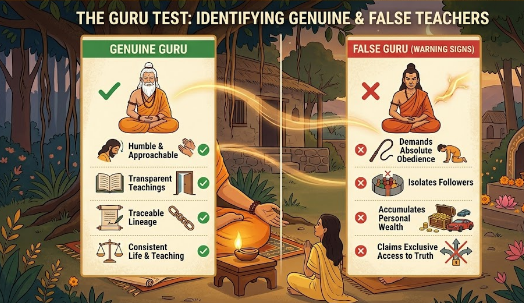
The Kularnava Tantra and other texts describe specific qualities of a genuine guru:
- Self-realized — has directly experienced the truth they teach, not merely intellectually understood it
- Established in their own tradition (parampara) — their lineage is traceable to a recognized source
- Free from personal desire for power, money, or followers
- Their own life reflects their teaching — integrity between teaching and living
- Capable of transmitting shakti — genuine teachers transmit an energetic blessing that accelerates the disciple’s growth
The Five Types of Gurus in Indian Tradition
| Type | Role |
|---|---|
| Veda Guru | Teaches sacred texts and ritual knowledge |
| Diksha Guru | Initiates into a specific spiritual path; the primary spiritual relationship |
| Siksha Guru | Teaches practical wisdom; there may be multiple throughout life |
| Nishiddha Guru | Teaches by example what NOT to do; negative lessons |
| Sad Guru (Inner Guru) | The inner voice of your own highest wisdom — the ultimate goal of all outer teaching |
How to Find Your Guru
The tradition says: “When the student is ready, the guru appears.” This is taken literally — genuine seekers report the right teacher appearing at exactly the right moment, often through seemingly coincidental circumstances.
- Deepen your own practice first — study, meditate, serve. The quality of your inner seeking attracts the outer guide.
- Study multiple teachers without committing prematurely
- Observe the teacher’s actual life, not just their teachings
- Trust the feeling when you find the right guide — there’s usually a recognition quality, like meeting someone you already know
Learning Without a Physical Guru
Not everyone needs a living physical guru. The tradition acknowledges mantra diksha received in a dream or meditation; siddha gurus who guide through inner transmission; sacred texts as living gurus (the Bhagavad Gita and Yoga Sutras); and nature itself as guru – the sun, river, and trees teach those with eyes to see.
The sincere seeker is never without guidance. The question is always whether we’re listening.