


📢 Disclosure & Disclaimer: This post may contain Amazon Associates affiliate links. As an Amazon Associate, I earn from qualifying purchases at no extra cost to you. ⚕️ Medical Disclaimer: This article is for informational and educational purposes only. Sleep issues can have underlying medical causes. Consult a doctor if you have chronic insomnia or a sleep disorder.
Sleep is the single most powerful performance-enhancing activity available to every human being — and it’s free.
Yet millions of Indians are chronically sleep-deprived. Late nights, early mornings, irregular schedules, phone addiction, work pressure, family demands — sleep is the first thing we sacrifice and the last thing we prioritize.
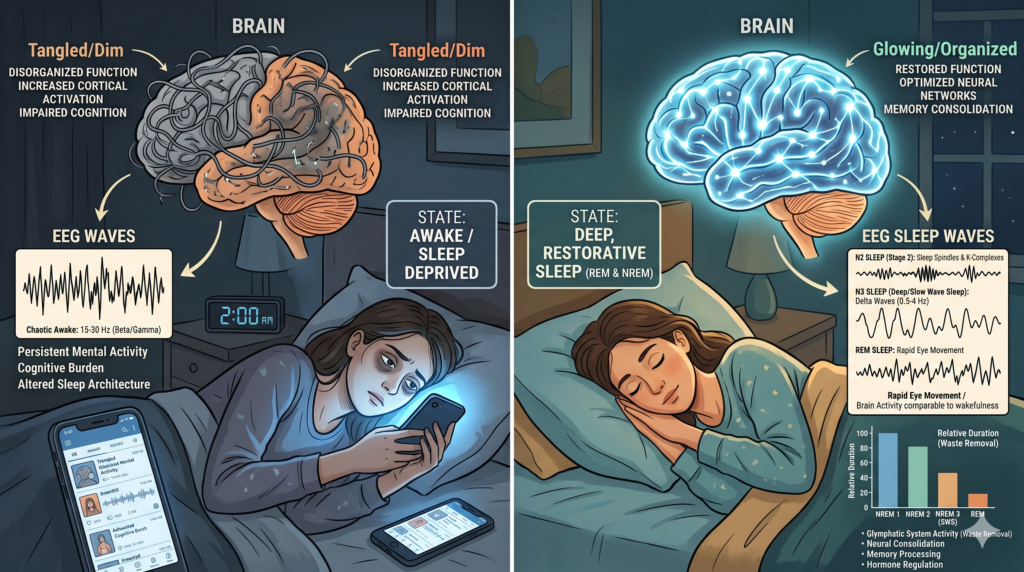
What Happens When You Sleep (The Science)
| Sleep Stage | What Happens |
|---|---|
| Stages 1–2 (Light Sleep) | Transition, body temperature drops, muscles relax, procedural memory consolidation begins |
| Stage 3 (Deep/Slow Wave) | Most physically restorative. Growth hormone released. Immune system activates. Brain flushes metabolic waste. |
| REM Sleep | Emotional processing, creative consolidation, memory integration. The brain “re-wires” itself. |
⚠️ Critical fact: Cutting sleep by 1–2 hours doesn’t reduce benefits by 10–20%. It reduces them by 40–60%. Sleep deprivation is disproportionately damaging.
The Ayurvedic Sleep Wisdom
Ayurveda treats Nidra (sleep) as one of the three pillars of health:
- Sleep by 10 PM — Pitta time (10 PM–2 AM) is when the body does most repair work. Being awake means your mental Pitta is active instead — the mind churns rather than resting.
- Wake by 6 AM — Kapha time (6–10 AM) if slept through brings heaviness and lethargy
- Warm oil foot massage before sleep — dramatically improves sleep quality through reflexology and warmth signals
- Avoid spicy, heavy, or fermented foods after sunset — these stimulate Pitta and disrupt sleep
The 7-Rule Sleep System
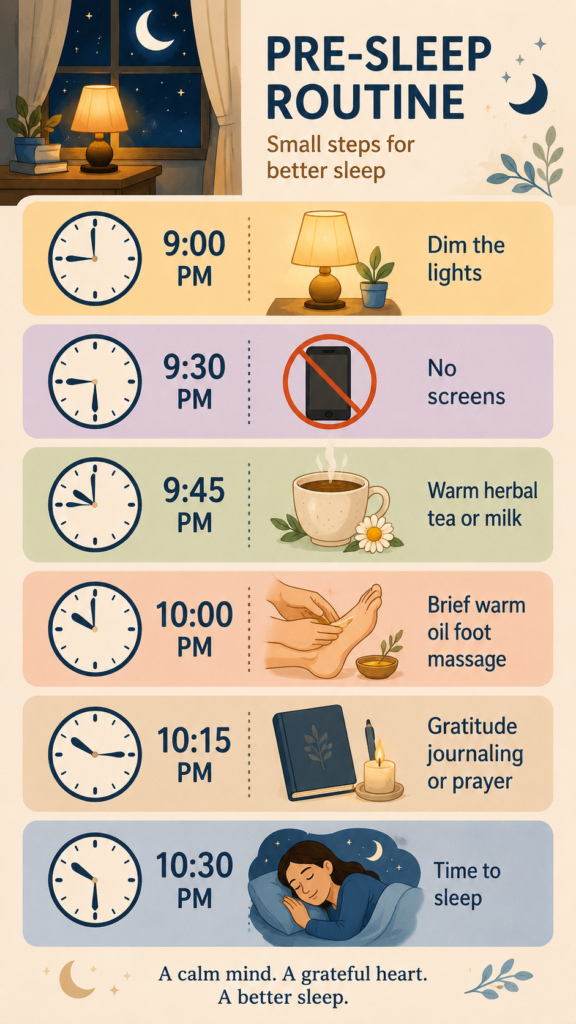
- Consistent schedule — same bedtime and wake time, even on weekends. Your circadian rhythm is the most powerful sleep regulator.
- No screens 60 minutes before bed — blue light suppresses melatonin production by 50–80%. The single most impactful sleep hygiene change.
- Cool, dark, quiet room — ideal sleep temperature is 18–20°C. Darkness triggers melatonin.
- No caffeine after 2 PM — caffeine has a half-life of 5–6 hours. A 3 PM cup is 50% still in your bloodstream at 9 PM.
- Morning sunlight within 30 minutes of waking — sets circadian rhythm, the master clock governing sleep quality that night.
- Exercise — but not within 3 hours of bed — improves sleep quality significantly, but late intense exercise raises core temperature and cortisol.
- Stress processing before bed — journal, meditate, do a brief mental “download” before lying down.
Read More : Eat Healthy on ₹100 a Day: The Indian Budget Nutrition Guide
Natural Sleep Aids That Actually Work
- Ashwagandha — reduces cortisol and significantly improves sleep onset and quality
- Warm milk with nutmeg and saffron — traditional Indian sleep aid; tryptophan in milk, nutmeg is mildly sedative
- Chamomile tea — apigenin content has a mild anxiolytic effect
- Magnesium glycinate — deficiency is extremely common; directly linked to poor sleep
- 4-7-8 breathing before sleep — inhale 4 counts, hold 7, exhale 8. Activates the parasympathetic system.
💬 What’s your biggest sleep challenge? Too late to bed, can’t turn off the mind, waking at 3 AM? Share in the comments and I’ll suggest the specific fix! 🙏
Disclaimer: This article is for informational and educational purposes only. Chronic insomnia or sleep disorders require professional medical assessment. Consult a doctor if sleep problems persist. | As an Amazon Associate, I earn from qualifying purchases at no extra cost to you.