
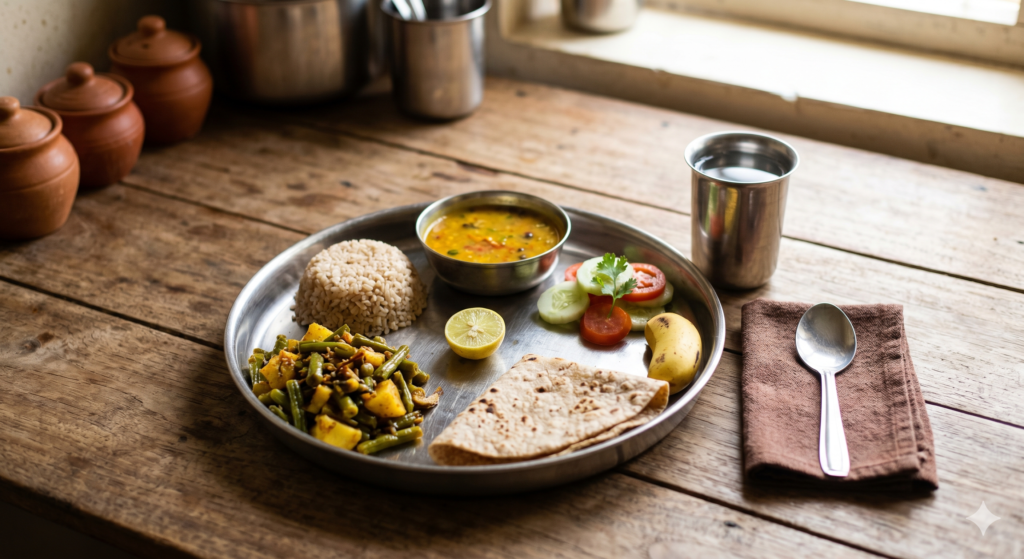

“Eating healthy is too expensive.” It’s the most common excuse for living on chai, biscuits, maggi and the occasional samosa — and it’s almost completely wrong.
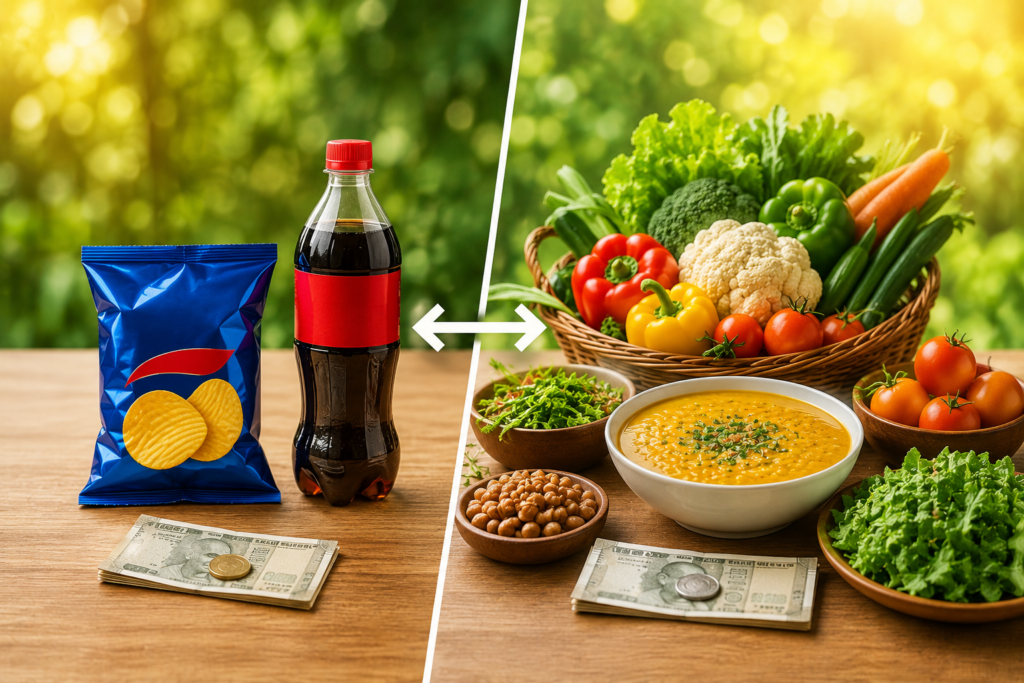
Here’s the truth most people miss: some of the most nutritious foods in India are also the cheapest. A packet of chips costs more than two eggs. A cold drink costs more than a glass of milk. The expensive, unhealthy stuff is the packaged, fried and branded food — not the dal, soya and seasonal sabzi that quietly do far more for your body.
In this guide you’ll see exactly how to eat a balanced, satisfying, protein-rich day of food for about ₹100 — with a sample day and a shopping list you can use tomorrow.
The Biggest Myth: “Protein Is Expensive”
People assume protein means chicken or paneer, which feels pricey. But look at how much protein you actually get for every ₹10 you spend:

Humble soya chunks give you roughly four times the protein of paneer for the same money. Peanuts, dal and eggs all beat the “premium” options too. Once you know this, eating well on a budget stops feeling like a sacrifice.
A Full Day of Good Food for ~₹100
Here’s one balanced day for a single person, spread across breakfast, lunch, snacks and dinner. Swap freely for whatever’s cheap and in season near you:
| Meal | What | Approx |
|---|---|---|
| Breakfast | Poha with peanuts + a banana | ₹15 |
| Mid-morning | 2 boiled eggs (or roasted chana) | ₹12 |
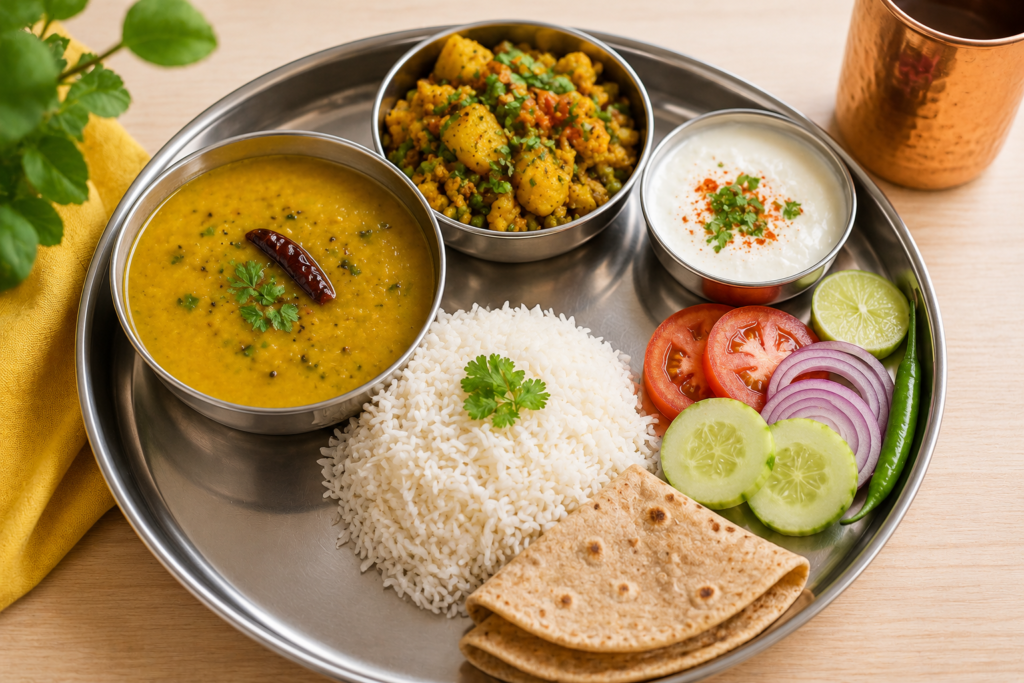
| Lunch | Dal + rice + seasonal sabzi + curd | ₹32 |
| Evening | Sprouts chaat or roasted chana + tea | ₹11 |
| Dinner | 2 roti + soya/rajma curry + salad | ₹30 |
| Total | Protein, fibre, veg & dairy covered | ₹100 |
That’s protein, fibre, vegetables and dairy in one day — for the price of a single plate of restaurant food.
Your Cheap Nutrition Heroes
Build your week around these and you’ll get the most nutrition per rupee:
- Soya chunks — the cheapest protein of all.
- Eggs — cheap, complete protein in minutes.
- Dals & rajma — protein plus fibre.
- Peanuts & roasted chana — protein and good fats.
- Seasonal greens & sabzi — vitamins for very little.
- Curd & milk — calcium and protein.
- Sprouts — nutrient-dense and almost free to make at home.
- Banana & seasonal fruit — cheap energy and potassium.
Grab the free guide — the full ₹100 sample day, the nutrition-heroes shopping list, and 7 money-smart eating tips on one page.
7 Money-Smart Eating Habits
- Buy seasonal and local — it’s cheaper, fresher and tastier.
- Pair dal with rice or roti — together they make a complete protein.
- Lean on soya chunks — the most protein per rupee, by far.
- Cook at home — a fraction of the cost of packaged or outside food.
- Buy staples loose or in bulk — not small branded packets.
- Plan so nothing is wasted — today’s leftovers are tomorrow’s lunch.
- Drink water, not cold drinks — free, and far healthier.
Steal My AI Prompts
Paste into ChatGPT or Claude and swap the [brackets]:
1. Build your own ₹100 day:
Create a balanced [vegetarian/non-vegetarian] one-day Indian meal plan for about
Rs.100. I live in [city], and I like [foods]. Keep it high in protein, use cheap
seasonal ingredients, and list a rough cost for each item.
2. Turn a weekly budget into a plan:
I have Rs.[amount] a week for food for [number] people. Build me a simple,
balanced shopping list and rough meal plan that minimises waste and maximises
protein and vegetables.
3. Cheapest protein near you:
List the cheapest high-protein foods available in India right now, with a rough
cost per 10g of protein, and 3 easy ways to cook each one.
4. Make boring budget food tasty:
Give me 5 quick, tasty ways to cook [soya chunks / dal / eggs] so cheap, healthy
food doesn't get boring. Keep ingredients simple and Indian-kitchen friendly.
Helpful Resources & Products
Trusted reading: the ICMR–National Institute of Nutrition dietary guidelines and “My Plate for the Day”.
- Pantry staples in bulk (soya chunks, dals, peanuts) — cheaper per kg than small packs — [add your Amazon affiliate link]
- A steel tiffin / meal-prep set — carry home-cooked food and stop buying out — [add your Amazon affiliate link]
- A sprout maker — turn cheap moong into a nutrient-packed snack — [add your Amazon affiliate link]
Frequently Asked Questions
Isn’t cheap food automatically unhealthy?
Usually it’s the opposite. Dal, eggs, soya, sprouts and seasonal vegetables are cheap and nutritious. It’s packaged, fried and branded food that’s both expensive and bad for you.
Can vegetarians get enough protein on a budget?
Easily – soya chunks, dals, peanuts, curd and sprouts are all cheap protein. Combine dal with rice or roti to get a complete protein.
Is ₹100 a day actually realistic?
For one person cooking at home, roughly yes across much of India. Treat it as a flexible framework — scale it up for a family or a costlier city.
Are eggs or soya okay to eat daily?
For most people, yes, in normal amounts — just vary your sources through the week. If you have a medical condition, check with your doctor.
What’s the quickest cheap protein?
Boiled eggs and soya chunks for meals; roasted chana and sprouts for snacks. Fast, filling and easy on the wallet.