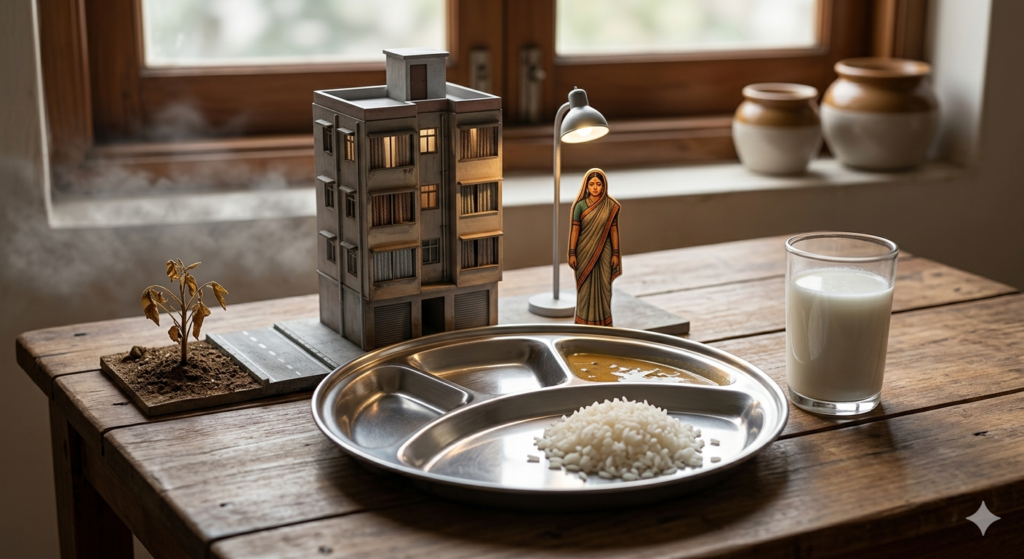

India gets sunshine almost every single day of the year. So vitamin D deficiency should be a problem for cold, grey countries — not for us, right?
Here’s the uncomfortable truth: a 2025 nationwide analysis by Metropolis Healthcare, covering over 22 lakh test results, found that nearly half of all Indians tested were vitamin D deficient, with another quarter in the “insufficient” range. In some city studies, deficiency runs as high as 80–90%. We are a sun-rich country full of sun-starved bodies.
If you’re often tired for no reason, catching every cold going around, or aching in your bones and back — this might be why. The good news: it’s one of the easiest deficiencies to fix once you understand it. Let’s break down why it happens, how to spot it, and exactly what to do.

The Paradox: Sun Everywhere, Deficiency Everywhere
Our bodies make vitamin D when bare skin meets the sun’s UVB rays. The problem is that modern Indian life quietly blocks almost every step of that process:
- Melanin. Indian skin has more melanin, which is brilliant natural sun protection — but it also means we need more sun time to make the same vitamin D as lighter skin.
- We live indoors now. School, office, commute, home — many of us barely get direct midday sun on our skin.
- We cover up. Full-sleeve clothing and staying in the shade (sensible for heat and culture) leave little skin exposed.
- Glass and sunscreen block UVB. Sunlight through a window or after sunscreen feels warm, but makes very little vitamin D.
- Pollution. Haze over many Indian cities scatters the very UVB rays we need.
- Our food barely helps. The typical Indian diet — especially a vegetarian one — contains almost no vitamin D (more on that below).
The Signs Most People Miss
Low vitamin D rarely announces itself. The symptoms are vague and easy to blame on a busy life: ongoing tiredness, frequent infections, bone or lower-back aches, muscle weakness, low mood (especially in winter), hair thinning, and slow-healing wounds. Because these overlap with so many other things, most people never connect the dots — which is exactly why a simple blood test matters.
Why You Can’t Just “Eat More” Vitamin D
A common reaction is “I’ll just eat better.” Unfortunately, very few foods contain meaningful vitamin D — and the richest ones are fish, which most Indian vegetarians don’t eat. Look at how everyday foods stack up against an adult’s daily need:

A typical vegetarian thali offers almost nothing. Even egg yolk and fortified milk fall far short. This is the heart of the problem: you simply can’t reliably eat your way to healthy vitamin D levels in India, which leaves sunlight and, when needed, supplements.
How to Actually Fix It (3 Routes)
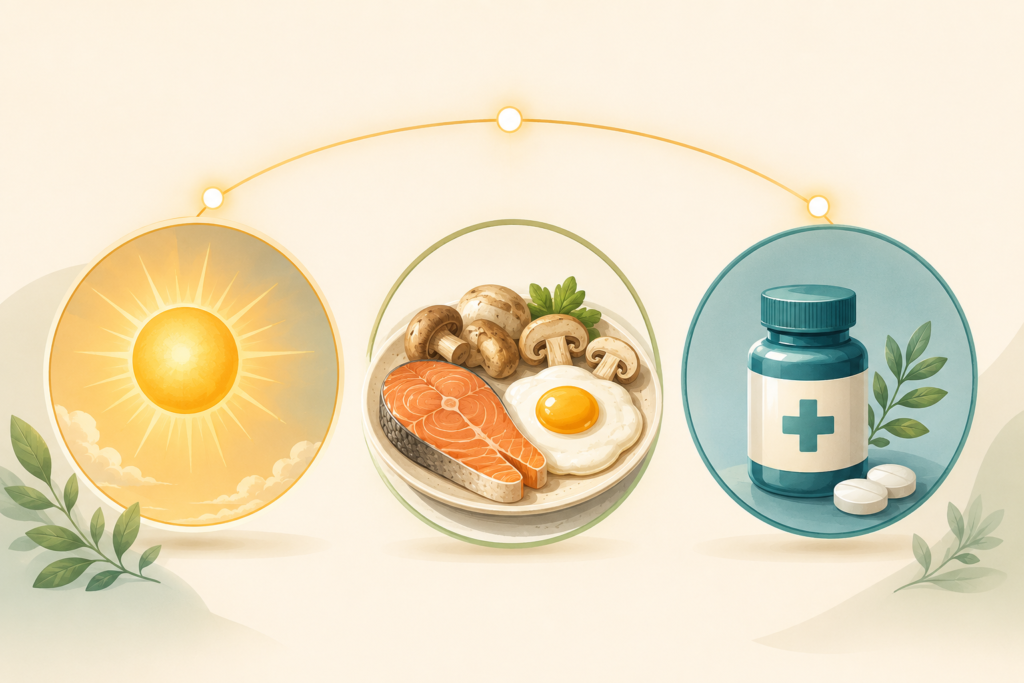
1. Smart sunlight (free). Expose bare arms and legs — not just your face, which is a small area — to midday sun a few times a week. Midday (roughly 10 am–2 pm) is when UVB is strongest. How long depends on your skin tone:
| Skin tone | Midday sun on arms + legs | How often |
|---|---|---|
| Fair | ~10–15 minutes | 3–4 times a week |
| Medium (most Indians) | ~20–30 minutes | 3–4 times a week |
| Dark | ~30–40 minutes | 3–4 times a week |
Never let your skin burn. Keep your face protected if you’re worried about tanning or ageing — your arms and legs do the work.
2. Food (a helping hand). Add what you can: fatty fish if you eat it, egg yolk, fortified milk, and UV-grown mushrooms. It won’t be enough alone, but it supports the rest.
3. Test, then supplement (the reliable fix). Ask for a 25-hydroxy vitamin D blood test. If you’re low, a doctor will prescribe the right dose for your level — far safer and more effective than guessing with over-the-counter pills.
Grab the free action plan — signs checklist, the smart-sun guide, what to ask your doctor, and a 4-week plan in one PDF.
Steal My AI Prompts
Paste into ChatGPT or Claude and swap the [brackets]:
1. Understand your test result (for learning):
My 25-hydroxy vitamin D result is [value] ng/mL. Explain in simple terms what
that range means, what questions I should ask my doctor, and general lifestyle
steps that help. Remind me this isn't a substitute for medical advice.
2. Build a sensible-sun routine:
Create a simple weekly sunlight routine for me. I live in [city], my skin tone is
[fair/medium/dark], and my schedule is [describe]. Suggest realistic times and
durations for safe midday sun without burning.
3. Vegetarian vitamin D meal ideas:
Give me a week of vegetarian Indian meal ideas that include the few foods with
vitamin D (fortified milk, egg if I eat it, UV mushrooms, fortified options).
Keep it affordable and practical for an Indian kitchen.
4. Prep for your doctor visit:
I think I may be low on vitamin D. Help me prepare for a doctor's appointment:
which test to ask for, what symptoms to describe, and a short list of smart
questions about dose, duration, and re-testing.
Helpful Resources & Products
Trusted reading: the NIH vitamin D fact sheet for the science, and this review of vitamin D status in India for the data behind this article.
- A home vitamin D test kit (or book a lab 25-OH-D test) — [add your Amazon affiliate link]
- A vitamin D3 supplement (only after testing, at your doctor’s recommended dose) — [add your Amazon affiliate link]
- Cod liver oil capsules (a natural source, if it suits your diet) — [add your Amazon affiliate link]
Frequently Asked Questions
Can I get enough vitamin D from sunlight alone in India?
In principle, yes — but melanin, indoor lifestyles, pollution and covered skin make it hard in practice, which is why so many people still fall short. Regular midday sun on your arms and legs is the best free start.
How much sun do I actually need?
It depends on your skin tone — roughly 15–40 minutes of midday sun on bare arms and legs, a few times a week (see the table above). Never let your skin burn.
Does sunscreen stop my body from making vitamin D?
Sunscreen reduces the UVB that makes vitamin D. A short period of unprotected exposure on your limbs helps; you can still protect your face to avoid tanning and ageing.
Can vegetarians get enough from food?
It’s very difficult. Vegetarian sources are limited to fortified foods, UV-grown mushrooms, and (if eaten) dairy and eggs. Most vegetarians who are low will need sun plus a supplement.
Should I start a supplement without testing?
It’s better to test first. A doctor can match the dose to your actual level — taking high doses you don’t need can do harm.
How long does it take to recover?
It varies by person and starting level — often a few weeks to a few months with the correct dose. Your doctor will tell you when to re-test.